
Terri’s Top Ten Tools for Recovery and Healing

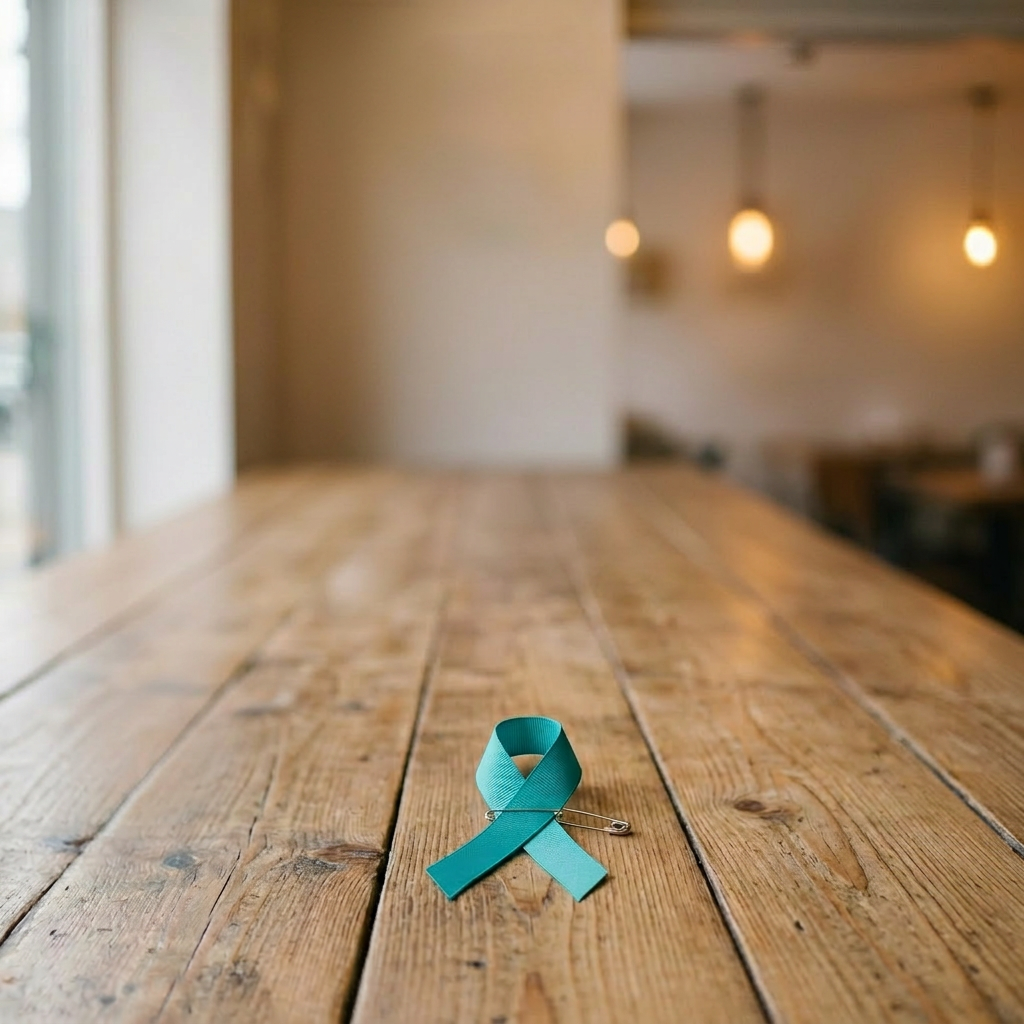
a teal awareness ribbon sitting on a wooden table
A teal ribbon symbolizing awareness and support

May is mental health awareness month and I’ve been thinking all month about what I wanted to post. It has taken me a very long time to get comfortable owning and talking about my struggles with mental health. I’ve been supportive of others publicly but always pretty private except with my own inner circle of friends. That has been lonely.

In my upcoming book, I talk a lot about the causes and conditions of my mental health and physical health struggles. I also talk about how I’ve worked to heal from the adverse childhood experiences as they are called in the literature. There are many posts which list resources so I don’t want to do that other than lift up the Trans Lifeline and The Trevor Project-two lifelines that serve trans and LGBTQ+ people respectively. There are many posts that talk about the stigma associated with mental health so I won’t say much about that either.

What I think I want to say is that when I first got into therapy following a suicide attempt, I thought “Okay, a year of therapy should fix this.” I thought that after that year or some amount of time, I would never again be negatively impacted by the trauma of my past. That has not been my experience. But things have gotten better. Here are my top ten things that I think helped make the difference.

  1. Good therapy–more than any particular technique, I had a therapist who really was wise, patient, caring, and always there for me but never coddling. She met with me multiple times weekly for many years and patiently told me the things over and over until I started to remember them and to be able to apply them. When I messed up…which I did…she didn’t fire me but we talked it through and I was able to learn. She was genuine and authentic while still holding appropriate boundaries. She is one of the people to whom I owe my life.
  2. Getting clean and sober–As long as I was drinking and drugging, I couldn’t really benefit from the therapeutic help I was being offered. I had to put the drink and drugs down and pick up a kit of spiritual and practical tools to be able to stay clean and sober one day at a time. As of May 25th, 2026 I’ve been clean for 33 years. I’m so grateful to the recovery program and all the people who have helped me on this journey.
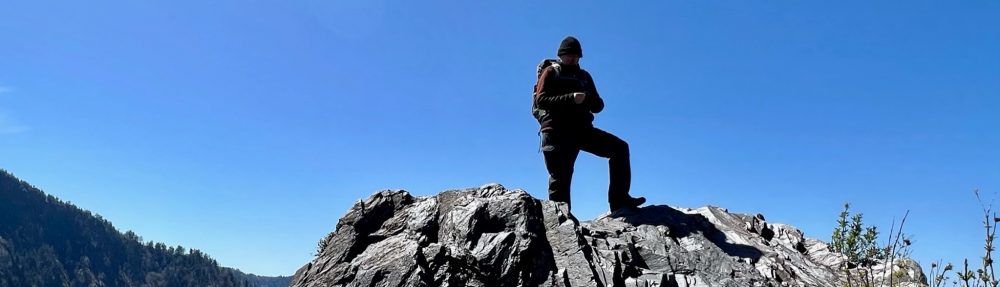
  3. Getting outdoors–hiking, camping, sitting in my backyard under the trees, kayaking. There is something healing about getting outside. When I was getting sober and trying to outlast the urge to drink, I would go hike. If I finished the hike and still wanted to drink, I’d do another lap. The physicality and nature would always bring relief.
  4. Spirituality and meditation–not religion but a spiritual path. Recognizing as a friend of mine says that I didn’t make stars. There’s something bigger than me that made stars and trees and rivers and that I can tap into. I find it in a few specific places that work for me. And meditation the more I’ve engaged in it, the calmer my nervous system has become.
  5. Purple puzzles and riding out urges to use or self-harm–My therapist had me make a list of things I could do to calm myself or distract myself when I felt the urge to drink, drug or hurt myself. One night it was literally sitting with a friend and putting together a puzzle that was entirely the same shade of purple. DBT calls it ‘urge surfing’ and I have found it to be a very useful tool.
  6. Learning to set and hold boundaries–saying what I really felt, thought, or needed (or didn’t need) has been critically important. Knowing that if I went to stay with a family member that I needed to stay in a hotel for my own sanity and self care and communicating that was important for me and also allowed me to be more present for my family member. That’s just one example among many I could give. In so many ways, speaking my truth and sticking to it has made life better. Not always easier but better.
  7. Self-expression–for me that has meant journaling, drawing, music, and for a time my punching bag. I had to find ways to externalize all that I was feeling. When things were kept inside, they were too big and too intense. These ways of coping allowed me to externalize feelings and diffuse them. That allowed me to share them with my therapist when I couldn’t find ways to just talk them through. And the act of expressing them was healing. Over time they got less intense.
  8. Medication–I resisted medication for a long time because I thought it was a crutch. What I have found is that medication has been able to help me apply tools and use strategies and medication itself has helped shift my mood. For me there is a definite biological component to depression and night terrors that responded only when I took the proper medication. I take medication for my ailing heart and don’t judge that…why should I judge the fact that my brain needs some support to regulate itself.
  9. Learning that it was okay and wise to comfort myself–I love a soft comfy blanket. It was a long time before I let myself have that. I also have a few stuffed animals. I love incense and candles and comfy hoodies. A cup of hot tea. Soothing sound tracks or music. Finding sensory comforts helps when my nervous system is overwhelmed.
  10. The best friends in the world of whom my wife is one–I am grateful to have a host of truly remarkable and reliable friends who love and support me. And have for years. I can reach out to celebrate or to ask for support and they will be there for me in either case. And I have learned how to be there for them. Not just ‘hey let’s go have a good time friends’ though I do have great times with them, but friends who really care and show up when I need them to.

So there you have my top ten things that have contributed to my healing. There are still hard days but things are so much better. I can feel joy today…not just intellectually but in my body and soul. When things are hard, I have tools and supports to cope and my reactions are so much less intense these days.

If any of these are helpful for you, I am glad. If not, that’s okay too. I hope you find what works for you and your life and healing. May we all find peace and may we all be free.

Another Step Along the Journey

shelf of books in background with two open books in foreground.

In 1990, I stood looking through the bookshelf at Southern Sisters, a women’s bookstore in Durham, NC. It was located in an older two-story house near the original Durham Bulls baseball stadium. Holly Near was playing in the background and there were a couple of women in the kitchen that was in the back. I was 22 years old and desperately looking for a book that would tell my story, or at least help me make some sense of my story thus far. I could find pieces of my story but not all of it in one place. And at the time, I couldn’t even read some of those pieces without needing to go drink, drug, or hurt myself afterward. The fact that I never found my story is one reason I decided to write this book. 

(c) 2026 Terri Phoenix

Thus begins my memoir which has now had four complete revisions working with a professional editor. I’m at the place where I’ve filed for copyright and am researching agents and publishers. I know there is still a long way to go but to get to this point is exhilarating.

The book chronicles my experiences of childhood abuse of multiple kinds by multiple people over the course of fourteen years. I ended up on probation and in foster care my junior year in high school. But with the help of my coach and his wife and their oldest daughter, Jody, I managed to graduate and attend college on a scholarship.

I’ve written here before about the groundbreaking study that described Adverse Childhood Experiences and their long term effects. What the research since that time has demonstrated is that there are things that mitigate to some greater or lesser extent the negative impacts of such experiences.

My story is a testament to the accuracy of that research and is a tribute to the many people who help me survive and thrive. There are harrowing stories but also hysterical ones along the way to where the book concludes. Stay tuned here to learn more about the progress.

Metta as a Practice to Find Peace in the Storm

Storm cloud with sunlight coming through

Metta is a non-hostile orientation of the heart. A willingness to not meet harm with hatred.
Even when the harm is undeniable.

Sharon Shelton

For the past couple of months, I have been attending a Sangha. A Sangha is a community of Buddhist practitioners. We meet and meditate for a period of time and then a teacher shares a talk, what’s called a Dharma talk.

One of the topics that has come up frequently is Metta, often translated as loving kindness. Though this post is not intended to give a teaching on Metta as I am not qualified, I do want to share some things I’ve gathered from wise teachers and talk about how the teachings have affected me.

As noted by Sharon Shelton, Metta is not about being nice or ignoring harm where harm exists. Rather it is a non-hostile orientation of the heart. You begin by offering loving kindness to yourself. Then widen the circle to someone that you care about deeply. A friend, family member, partner, spouse, child, or anyone for whom it is easy to project loving kindness toward. Then you open the circle wider to acquaintances or people toward whom you might be indifferent. Then to people who are difficult. Finally, sending loving kindness to all beings. You don’t have to feel loving kindness or any warm emotion, rather it is a decision to send positive energy into the world regardless of any emotional state.

For me, it has been a way of trying to cope with things in the world that are unjust, painful, egregious, and that without stabilizing practice could bring me to despair or rage. I struggled with the concept of sending loving kindness to people I felt were acting in unjust and harmful ways. What was suggested to me is not to start out picking the people toward whom I hold strongest feelings of dislike or judgement. Don’t start out by picking the ten on the Richter scale. Pick someone who is more of a four or five. Also, if I can’t orient my heart to kindness to anyone I dislike, I can send loving kindness to myself for being human and exactly where I am.

I have appreciated the distinction of Metta as a non-violent orientation of the heart. Though sometimes I feel intense anger and in all honesty even hatred, I truly understand that putting more hostility and violence into the world will not bring peace. And I want to contribute to peace in the world when all is said and done. If I cannot contribute peace, I can at least decide to do no harm.

The other thing I have appreciated about the recent talks I’ve attended is that Metta is a way of grounding oneself and from that grounding taking skillful, ethical action. Metta is not about ignoring the harms in the world or sitting by and doing nothing about them. But it allows me to see clearly and to approach actions from a place of peace and steadiness rather than rage or anger or despair.

Finally, I have come to understand that meditation stills me and allows me to act more skillfully in my life and in my interactions with others. That in and of itself is “doing something” or “taking action.” I watched recently as a group of monks transformed communities by their peaceful and calm presence. Thousands gathered to witness them and to hear their message. I was fortunate enough to get to see them at one of their lunch stops while they were in North Carolina. Though there were several thousand people gathered, there was no pushing or shoving. No clamoring to be in the front of the crowd. Instead people were generous and helpful to others. Wanting to make space for as many as possible to hear and see the monks. I believe that was a product of the orientation of their hearts and how it manifested out. It inspired me to try to cultivate such qualities in myself. I am far from what I witnessed but I will continue to practice.

There are many places online from which to learn about Metta and other Buddhist practices. And remember that Buddhism is about practices, it is not a religion. I encourage you to seek out those places where you can read, listen, and learn. And if Buddhism is not for you, please seek wisdom from sources you trust. We need more peace, love, justice, and skillful action in the world that is right now. Those are the only things I believe will ultimately save us.

Each Day a New Beginning

Bird flying through a sunrise


The year that is going to end is our invention, our fabrication, our product. The value of the year depends on our way of acting and reacting, on our way of living our life. If we do not master the practice of generating joy and happiness, if we do not know how to handle painful feelings and emotions, we are going to repeat that in the new year. And the new year will not be very new, but a repetition of the old year. So, for the year to be new, you have to renew yourself. You have to make yourself new.

excerpt from a Dharma Talk offered on December 29, 2013 by Thich Nhat Hanh. From Plumvillage.org

When I was a child, I seldom got new clothes or new things in general. The exception to that was the late summer trip with my grandparents, Gigi & Nandaddy, to buy school supplies and new shoes. We would also get a new outfit or a new winter coat. That may not sound like much but to a kid who almost always shopped at thrift stores, new was a huge deal.

We would load into Nandaddy’s Bonneville and head down to the Woolworth’s department store. My nerves would be quivering as we walked into that newness. New smell, new clothes, new shoes whose soles weren’t already worn. We also would go to the Walgreen’s to get school supplies…oh for a box of new Crayola crayons. I coveted the box of 164 but was so grateful for the box of 16.

My new year was marked by that trip. It wasn’t just the new stuff though that was important. Since I was most often in a new school because of how often we moved, It was the possibility that maybe in this new school, I might find friendship and acceptance and not be the one targeted by the school bully or mean girls. Maybe someone would want to share my box of crayons.

As an adult the traditions were a little different but how often I’ve looked to an external “new” as a time for an internal change. The possibility associated with a new job, new retirement, new relationship, or new car for the development of new habits or new feelings that I’ve long wished for.

The reality is that the new year begins each moment I open my eyes in the morning and with each new breath I take. Each moment is the continuation of the adventure of my life and offers me the opportunity to choose to love more deeply, stay in touch better, and to start or continue practices that make my soul and life richer.

So, yes, let us celebrate the new year but let us also remember that each new day, each new moment, is a new beginning, filled with opportunity to live with intention.

And although external things won’t bring the internal peace and joy my soul craves, I am still going to treat myself to new box of crayons. 

Happy Wolfenoot

Wolfenoot image of wolf in night

Never heard of this holiday? Many people haven’t so don’t feel bad. It was created by a seven year old in New Zealand a few years ago. It is a celebration of canines and kindness. It is also about celebrating our pack-human and animal. The Spirit of the Wolf leaves gifts for people and the people who are kindest to canines get the best gifts. It is always celebrated on November 23rd.

My family and I have been celebrating this holiday for a few years now and have shared it with others. This year, we are throwing a Wolfenoot party for a group of folks who I consider one of my packs. I also will be giving a donation to the Ely, Minnesota based nonprofit called the International Wolf Center.

Whether you have a canine in your life because you have one now or have had one in the past, or because you sometimes borrow or are affectionate toward one that a friend has, you too can celebrate this lovely holiday. You can celebrate that canine, canines in general, or your own human pack.

Happy Wolfenoot everyone!

Freedom Without Forgiveness

In many religious traditions and twelve step programs, people are admonished to forgive those who have hurt them. I want to offer something for consideration from my lived experience. 

I grew up in households with five different step-fathers and numerous of my mother’s boyfriends who were all physically and/or sexually abusive. This left me with a few resentments to be sure. 

When I got sober, my first and second sponsors told me that forgiveness was not necessary for me to find freedom from the resentments that stemmed from the complex trauma of my youth. However, to remain sober and to have a happy life, I would need to find freedom from being consumed by those resentments and to let go of any thoughts of retaliation. 

For me that process was many years in the making but consisted of a few action steps. First I had to understand how my experiences had impacted me. I talked with a therapist who helped me understand how my emotional reactions and coping mechanisms stemmed largely from my childhood experiences. For example, I had learned to try to appease my abusers and continued to try to use that strategy as an adult. I had learned to dissociate so I wouldn’t have to bear the full emotional brunt of the experiences. I had continued that as an adult through the use of psychological mechanisms as well as drugs and alcohol. 

Then with my therapist and my recovery sponsor, I looked carefully at how those experiences were influencing my behaviors in the present. I started to learn other ways of coping. For example, I learned some self-soothing behaviors and grounding techniques to help me walk through times when I was experiencing great emotional distress. I learned to call another person in recovery or go to a recovery meeting or hike with a friend instead of turning to a drink or drug to sooth myself. 

And slowly, I worked through the anger and grief from having my childhood stolen from me. I drew a lot of angry pictures, listened to a lot of angry music, and then added more hopeful and resilient music. 

At no point did I feel the need to forgive the people who harmed me nor to try to seek out any relationship with them. Today, I am free. I am able to live happy, joyous and free for the most part. Life on life’s terms happens. But I am no longer a prisoner of my past. And that freedom, for me, was not contingent upon forgiveness.

I share this for people who experienced unforgivable trauma and for those who work with or advise people who experienced such trauma. Find freedom from your past and if forgiveness is your path, great. However, it is possible to have freedom without forgiveness of the one(s) who harmed you.

Why It Takes Time to Heal

“Why can’t you just get over it?”

“It happened so long ago, quit hanging on to it!”

“Aren’t you through with that yet?” 

These are all things that have been said to me when I have been open about my mental health struggles related to the abuse and terror I suffered as a child. I don’t think people meant to be harmful, though they were, but instead I think that people who haven’t lived through trauma just don’t understand the long term effects. 

To educate people, I share about a groundbreaking study conducted in the mid 1990s that has generated a mountain of follow up research confirming its findings. 

Adverse Childhood Experiences (ACEs) were first studied by Kaiser Permanente from 1995 to 1997. Over 17,000 Health Maintenance Organization members from Southern California received physical exams and completed confidential surveys regarding their childhood experiences with child abuse and neglect, household challenges, and other socio-behavioral factors. The surveys also asked about current health status and behaviors.

The study found that ACEs are common across all populations. Almost two-thirds of study participants reported at least one ACE, and more than one in five reported three or more ACEs.

The ACE score is the total sum of the different categories of ACEs reported by participants. Study findings showed that as the number of ACEs increases so does the risk for negative outcomes in academics, occupation, income, substance use, physical and mental health outcomes.

More information can be found in the original study “Relationship of Childhood Abuse and Household Dysfunction to Many of the Leading Causes of Death in Adults,”.

Another resource I share is the book Mindsight: The New Science of Personal Transformation by Dan Siegel. It it Siegel explains how trauma alters the construction of neural networks in the brain. The amygdala, the brain’s danger warning center, can get paired with stimuli present during traumatic experiences. Later, when those stimuli are present even in neutral contexts, the amygdala sets of an alarm and a cascade of chemicals stimulate a fear based response. And the more the stimuli were paired with traumatic situations, the stronger the association and the faster the automatic response. This is how a seemingly harmless sight, smell, taste, or touch can trigger a fear based response that seems out of proportion.

These two pieces of science have helped me understand myself and why I have some of the reactions that I do. It helped me to have more compassion for myself regarding flashbacks, intrusive memories, and aversions to seemingly neutral stimuli. Therapy has helped me find ways to deal with those things.

While I am responsible for the choices I make regarding how to cope, it is not my fault that I’m not completely over trauma experienced in childhood as if it never happened. Some wounds get in too early and go too deep to ever completely go away. I am better and I cope better these days though. And, thanks to sobriety, good therapy, and an awesome support network I have a life that is abundant, rewarding, and amazingly good.

But, no…I’m not “over it yet.” And if you aren’t either, be gentle with yourself and keep working along your own healing journey. 

Survivors of an Invisible War

I am moved to think about my personal hell of sexual violence and physical violence as a collective trauma. 

Sexual violence is a collective trauma where the victims find each other by chance, through recovery groups, music, or art. It is a trauma so prevalent but not discussed and where we who survive it have been taught to carry shame that was not ours to carry. Those responsible mostly go unseen and unpunished. Those of us that survive try strategies that are sometimes just as, if not more harmful than the pain we carry from the trauma itself. Drinking, drugging, burning, cutting, binging, starving, reckless endangerment of all sorts, workaholism, just to name a few. We use these until they don’t work anymore or until someone wades into the swirling waters to pull us out. 

Then we have to learn tools to cope. I believed at first that enough therapy and recovery would ‘make it all go away’ but what I know now is that I just have learned to cope better. DBT, ACT, AA, NA, and lots of other acronyms. Lots of good therapy if you are lucky enough to have insurance that pays, to find someone who takes your insurance or provide a sliding scale, and someone with whom you gel. Recovery is hard. Living with flashbacks, triggers of smells, sounds, sights, sensations. I always hate using restrooms in public for many reasons but one is that sometimes they use thick, cream-colored soap. It reminds me and I shudder to use it to wash my hands. And you can’t tell when it is in the container what it is going to be. So, it is a crapshoot. And often it really is crappy. 

Veterans of wars are celebrated and have ways of finding each other and bonding. But for those of us who have survived the war of sexual violence and abuse, there is not a Memorial Day or veterans’ day. I am grateful for the teal ribbon. My tattoo is a way of saying to others…I’ve survived. I am a veteran of our unseen war. It is a teal ribbon with the word ‘warrior’ in it with a semicolon for the dot of the ‘i’. It took a long time to be willing to get it because I still carried their shame. But now I wear it proudly and I appreciate those moments when someone else says knowingly, “I like your tattoo.” I am sad that they recognize it but glad they feel seen.

Visibility: Not Just for Pride Month

Pride month is coming to an end but that doesn’t mean that we should retire our pride attire. Visibility matters. As it says in the iconic flyer, Queers Read This:

Being queer is not about a right to privacy; it is about the freedom to be public, to just be who we are. It means everyday fighting oppression; homophobia, racism, misogyny, the bigotry of religious hypocrites and our own self-hatred. (We have been carefully taught to hate ourselves.)

For some people it isn’t safe to be out and visible. I want to acknowledge that reality. But it makes me feel all the more the responsibility to be out. When I wear one of my pride shirts, fly my progress pride flag at my house, or am out to my neighbor or colleague, it has the potential to shift perspectives. People come to see me as responsible, kind, funny, or as someone to whom they can relate rather than the caricature monsters or depraved that our haters portray.

And although there is much anger toward straight people in Queers Read This, I am finding more and more cisgender, heterosexual folks who embrace me and my family, who are taking actions to show their support for me and my communities. I invite more visibility from straight people. Their outness has the potential to change others’ views about us. Their outness about their support for LGBTQIA+ people will be the thing that changes outcomes at election time. They are not more important than queer folks but they are more numerous. 

Pride is protest and we desperately need protest against things like the Skrmetti decision from SCOTUS, from attacks on our right to marry the person of our choice, and from the myriad attacks being leveled at transgender people. I urge cis-het people to show their support and to be visible as allies throughout the year. I urge those of us LGBTQIA+ who can, to be visible all year long. I’ll be looking for you as I walk through my daily life.

Hello world!

I am looking forward to sharing some of my experience, strength and hope with you. Today what is on my mind is gratitude. Gratitude for how the path opens up before me as I take one step and then another. Gratitude for the friends and family and mentors that help me along the way. Gratitude that just for today I feel comfortable in my skin and hopeful for what is to come. And gratitude for this opportunity and for those supporting me in it.

Terri standing in downtown Durham